


Living With a Disability and Learning to Take Things Easier
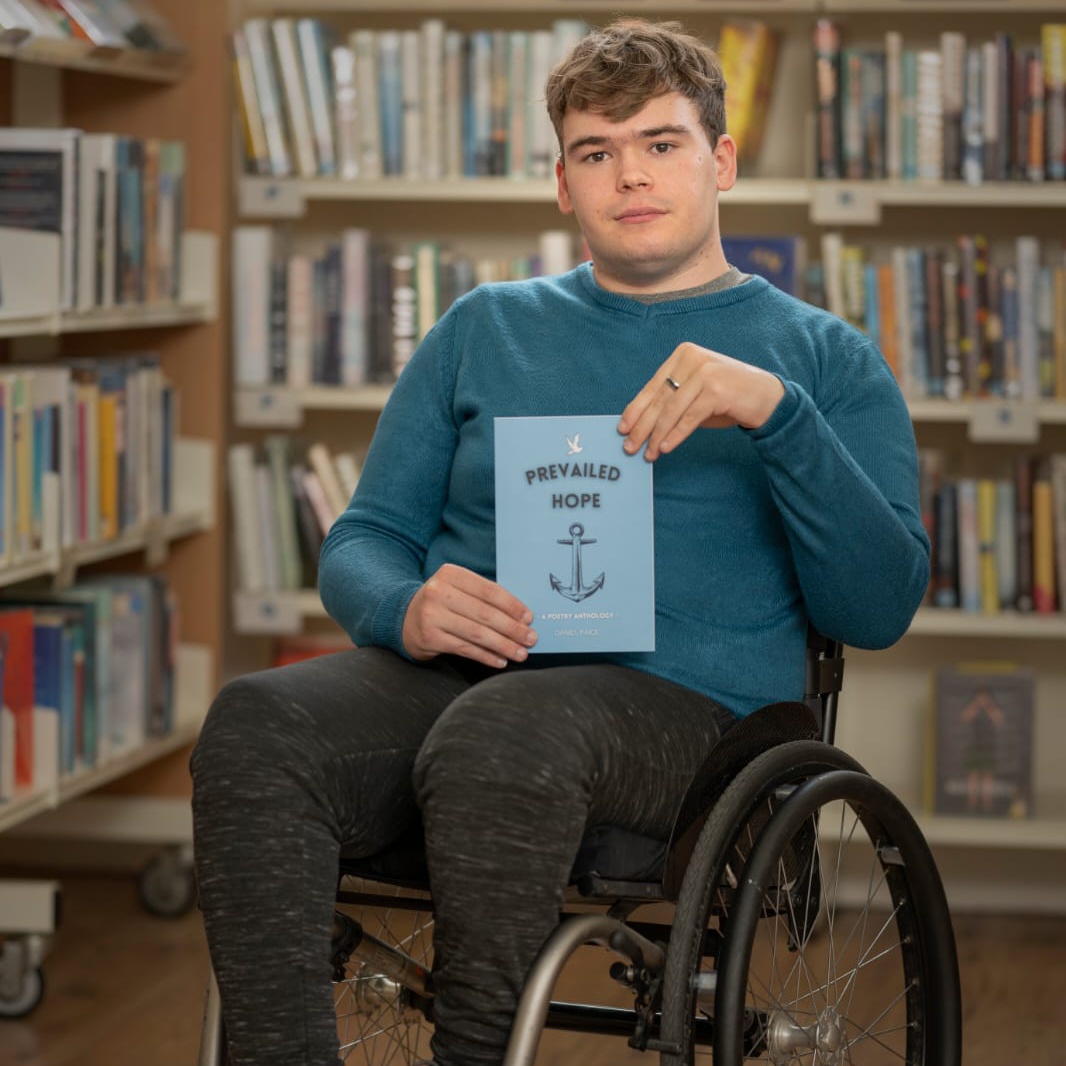

The title can be considered somewhat of a juxtaposition; people with disabilities are expected to live slower lives. Whilst this can be true in some ways — especially in terms of accessibility — this is not always the case.
As with many of my blog posts recently, I experience or consider something, and then realise that I need to write about it, in the hope that it helps somebody else.
I am finding I need to learn how to adequately manage my energy levels whilst also working out ways of doing everything that I want to do. That means that I need to learn how to take things easy — and also understand that that may look different because I have a disability. Having said that, many people get the impression that — because you have a disability — that must mean that you live a slower life. Or a life that is ‘less full of life’, but that is not necessarily the case.
Disability can look and feel very different to different people
Firstly, disability is such a broad term. Even people with the same condition — the condition itself can affect them differently. Take something benign like having a head cold, for example. We all know what that feels like, but we also have very different experiences of what we know of as a head cold. The same applies with whatever kind of disability. As another example, some people with a disability may not struggle to maintain a full-time job. I have a full-time job, but I wouldn't say that it doesn't come without its costs. I am very tired by the end of the day, and by the end of the week.
Now, when I say this, I'm under no illusion: able-bodied people are also very tired. However, there is so much more to consider when you're disabled. There is the practicality of actually getting to work, and the energy expenditure throughout the day. Having to manage those levels, whilst also maintaining the expectations of the job. Take another minute example of writing an email. Everybody does this — almost everybody can do it in some way — but many people will need to adapt the way that they do this. Whether that be taking more time to write the same email or, as discussed before, using voice-to-text, instead of physically typing.
In the space of just a few sentences, you can begin to realise how having a disability can immediately and directly affect your energy levels. However, as I've said before, it doesn't necessarily mean that you need to live a slower life.
For me, that would mean that I have to manage my energy in a different way; I have to take more breaks regularly, but that doesn't mean to say that I'm not able to complete the same work that somebody else is. Also, in terms of managing energy levels, I feel like there's an impressions that rest means doing absolutely nothing. Again, this is not always the case. It may mean that I need to be focused on one thing, rather than flitting between different tasks (I find changing tasks quite exhausting — both mentally and physically). Rather than being a slower day, it is doing things differently and in a structured way, so that I'm managing my energy.
One thing I have to do (that I don't believe many able-bodied people need to do), is managing time within the day, but also thinking about how my energy expenditure for today is going to affect the coming days through to next week. As well as how this may have implications on things I need to do. To again break this down into something that is comparable, it may mean that literally need to spend Saturday or Sunday writing or reading — or going through a very structured, but low-stress, to-do list in order to help myself feel organised and rested for the coming week. If I overdo it on the rest day, then I won't have recouped enough energy for the following week. By Tuesday or Thursday, I could be really feeling it. So there's always that ‘preemptive management’ as well as ‘in the moment management’.
Feeling as though time is constantly running out

I have just discussed that having a disability doesn't mean that you can't do things — it is simply the fact that you need to manage your time and expectations differently. With that comes an internalised expectation that I need to keep doing things, so that I achieve them, I do them, before I run out of time. This links back to my daily and weekly management of my energy. I sometimes feel as though I need to complete something by the end of the day, by the end of the week — otherwise I won't be able to get to it and I will be too exhausted.
I have a feeling that I put too much pressure on myself in the moment to get these different tasks completed (you think?), to the point where I do tend to burn myself out, even in the immediate term. When I say ‘burnout’, I don't necessarily mean in the traditional sense, but it's the feeling of working too intensely for a few days, and now I don't know what to do with myself. I feel so tired that I need to take a step back at this point. Part of my learning to better manage my energy would be focusing on spreading out how I'm spending my time so that I'm not crashing and burning.
Constantly finding new ways of doing things
One thing that is particularly good about needing to manage your time and think ahead in such a way is that you're constantly thinking of new ways of doing things. What immediately comes to mind is the voice-to-text dictation (I know I bring this up at every opportunity). It has been revolutionary in terms of my writing process, and it has allowed me to save so much energy and time. Which — as you have discovered during the course of this post — is completely invaluable.
You'll also be able to understand that — although voice-to-text is a fantastic way of working — it doesn't always make up for the fact that some days I will feel so exhausted from life's obligations and my day job, that I physically don't feel as though I can write or dictate. So, that then means that I get frustrated with myself, because I can't write in the way that I was expecting. To continue the analogy, depending on the type of tiredness, it may mean that although I can't actually draft a new piece, I can focus on formatting a blog post that has been edited. This also leads on to the fact that I need to prioritise what tasks I do and when, depending on my energy levels.
I am using the writing process as an analogy for what I am describing, but it also acts as a physical opportunity for us to explore that as well. Ironically, if we go back to the example of having a head cold, dictation would become particularly difficult because a blocked nose affects speech. So, then, I would have to be spontaneous in either deciding that I need to take the next few days to rest, or whether I need to focus on a type of editing that is less taxing. You can see how we are literally needing to pivot with a split second’s notice in terms of anything and everything that you do in life.
The urge to prove yourself

Whilst everything that we have discussed in terms of time and energy management and being able to come up with creative solutions is definitely a good thing, it can come with the need to prove yourself. As a disabled person, it can feel as though you're constantly at a disadvantage in comparison to someone who does not. You constantly feel as though, although you're in the same room as somebody, you're having to work ten times as hard just to do the same kind of physical, mental, or emotional work. So there is that thirst to prove that you deserve to be in the room. You deserve to be doing the work that you are perfectly capable of doing with the support and management.
I do find that it does help that I'm a naturally curious person, because not only am I looking for different ways that I can help myself as I transition through life, but I'm also considering how able-bodied people may need this explaining to them, or how they may be able to assist me; how I would easily explain to them my perspective of existing in a world that is not built for people with disabilities. You could even say that there is the extra work in terms of thinking for yourself, and also thinking in a way that able-bodied people will understand so that you can articulate how you need help. This is all in an attempt to make sure that you're on a level playing field with everyone else in life.
I think, by now, you can see how even the most mundane aspects of life can become overwhelming, because you're having you consider both yourself and other people all of the time, in order to preempt any issues that may arise; any questions that may arise. When it does become too overwhelming, there can be an impulse just to completely stop and start questioning why you bother at all. Speaking for myself, it can feel as though you are burning the candle at both ends just by doing everyday, normal things. Not only are you having to put the physical effort in, but you are also having to put the mental effort in. Let alone in terms of how you need to make sure that you are maintaining a baseline of continuity and stability.
As part of this, I am trying to teach myself that I am able to move on to the next thing when I want to, and I don't always have to be doing something. So, ultimately, I am trying to show myself that there is no obligation either way.
So — why am I writing this for you if it's about a disabled person? Yes, this is written from my perspective, and it's something that I have considered over the course of thinking about this topic and writing this draft; some ideas have come to me as I've been writing. The whole idea of this post is to give you both an overview and a micro perspective on energy levels and time management, and how that can be beneficial and how it can also feel like it's working against you. You might take some of what I've said and start thinking about how you live your life differently. You might completely turn against what I have said and carry on. Either way, it’s absolutely fine, because you will have considered what I have said and applied it in your own way as a way of coming to your decision.


Comments