


An Accessible Approach to Disability
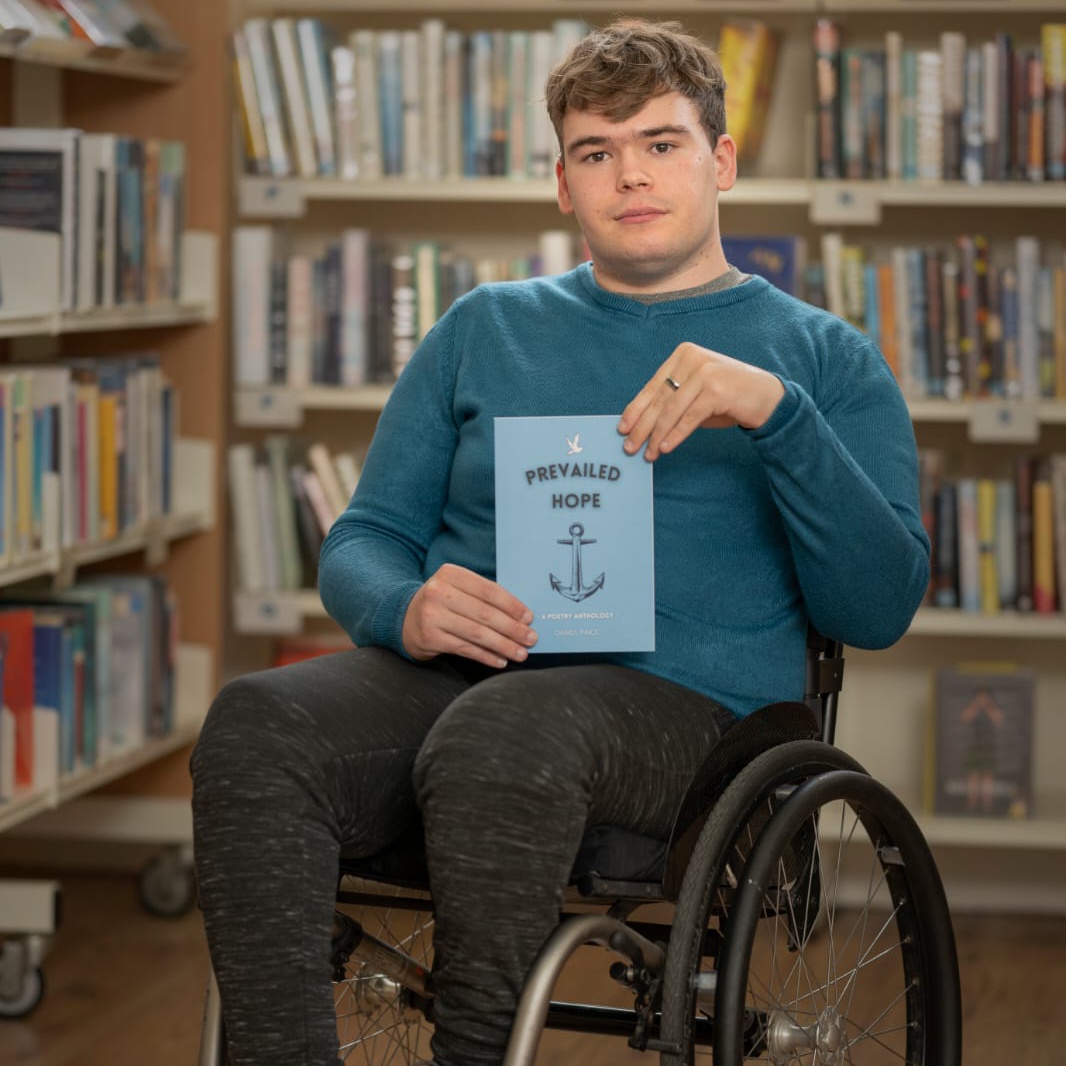

The title of this post may come across as though I am trying to tell people what to do, and I would never tell somebody what to do, unless they are asked for my advice, or I thought that they could do with some advice. I think there is a lot of discussion on how much of the world is not created for disabled people, and disabled people are not always considered in terms of the infrastructure of the world. Whilst I definitely do agree — there could be a lot to be done to accommodate disabled people and the variation in the disabilities that people can have — I do think it's an opportunity for me to educate able-bodied people on how disability can affect everything in daily life. As a way of helping them understand how they can help disable people — almost like an entry point, if you like, in terms of how the world looks. Which allows able-bodied people to better understand the perspective of where disabled people are coming from.
Are you using the mobility aid?
Firstly, disability needs to be considered as though you are actually using the mobility aid. For example, I had an experience, recently, where somebody very kindly moved the chair from under a table in order to give me room to sit in the space in my wheelchair. However, they hadn't yet considered that even though they have moved the chair, there is still not space for me to be able to maneuver my wheelchair into that space; and, therefore, that space is still inaccessible. They realised as soon as they had done it, and to be honest, I felt really guilty because they had done something without me needing to ask — out of the kindness of their heart — and they didn't realise that it was still going to be an obstacle. It really hit home how I find that able-bodied people don't have to think in the same way as disabled people. Especially terms of what steps they need to take in order to achieve something. To think about this really literally, an able-bodied person may only need to think about two different steps to different functions to be able to get from A to B. However, a disabled person may need to think about five to ten different ways of how they're going to get from A to B, and what aspects of this may be an obstacle or interference before they even get from A to B. What I'm trying to say is, there is a multi-layered thought process that I don't believe people need to go through. To be honest with you, it's like anything else in life: if somebody has had a unique experience in life, someone else is not going to think in the same way. Which, again, is why I've been using this post in particular, as an opportunity to educate people (if they are interested in being educated!).
So, if we think about it from the perspective of using the mobility aid, imagine that we are using a wheelchair for the moment. Just to set the scene: you're wanting to go to the pub with your friend. You may or may not be able to travel independently, and therefore you are either going to have to organise a lift with your friends (which can take time to organise), or you may need to think about other means of transport, such as public transport or taxis. That, in itself, comes with more obstacles.
I find that — although I can use some forms of public transport — it's very temperamental in terms of the support, and that has an impact on whether or not I can use that public transport. For example, in principle, I can use a bus. However, they don't alays have ramps — and therefore, it becomes inaccessible without the help of others. The ‘other people’ don't always feel comfortable — or as though they are ‘allowed’ to help me. This is the kind of thought process that I have to go through before the planning of the night out has even left the group chat, as it were.
If you decide to go to the pub by taxi, you then have to arrange it in terms of how long it's going to take you to get the taxi, and arrange for when you're going to meet your friends. Then, when you actually do get the taxi, you then have to think about the fact that the taxi driver is not necessarily going to know how to assist you with your wheelchair (if you do need that assistance), and therefore you're going to think how to explain this clearly. Of course, I don't mind explaining to people how they can help me — because the fact that they want to help me, and are willing to help me, is brilliant. It's just it's not the first time I've ever had to explain anything, and it can be an exhausting necessity as part of living with a disability. That's what I mean. I would need to explain to the taxi driver at either end of the journey; how to assemble and disassemble my wheelchair when I do actually get to the destination. I then need to navigate how I'm going to get from the pavement, for example, to the front door. Once I get to the front door, how am I going to get to the table that we may be sitting at? Am I going to be able to get through this independently, or am I going to need to ask somebody for assistance? Again, I'm having to explain myself. Like I say, it's brilliant that people are willing to help, and I'm more than grateful for their help. It's the level of thought processes that I am going to need to go through just to leave the house and get to the pub before anything even starts. That's exhausting. And that's assuming that everything goes to plan along the way. As a disabled person, you do get very good at being adaptable. It may be that — when I arrived at the pavement in front of the pub — that I'm not able to get up. Therefore, I need to travel a little bit further down the road to be able to get onto the pavement, and then circle back around to the pub itself — which is an added thought process. To be clear, I am not intending to come across as though I'm moaning or ungrateful. It's merely so that you can see the practical and mental jigsaw that goes into even the smallest of interactions.
So, what are some things that can help?
Another thing that I come across quite regularly is, if I were to go into a cafe and buy something and I need to use the card reader, quite often the card reader is up high from the perspective of somebody who's sitting in a wheelchair. So, I need to reach up. I'm lucky in the sense that I can do that, but sometimes it's not always feasible. Then, I have to ask people to move it closer — and I have had one or two people roll their eyes at me. That said, there is the other side of things, where people are not sure whether to help you or not. I understand this completely, because I can see that they're trying their best to be accommodating and they're trying their best to help me, but they also don't want to help me too much and come across as insulting my independence. I do understand that because, on the one hand, disabled people crave their independence where they can have it, but also there are many aspects of life where they do need that extra bit of assistance. It's difficult for somebody who is not them to know precisely what to do. After all, people are not mind readers. To be completely honest with you, if somebody were to come up to me and say “what help do you need?”, I would be more than happy to explain that I would be able to do X, Y, and Z. It's important to note, here, that when people do ask me if I want assistance I do tend to keep my suggestions quite open-minded, because I am aware that how they may try to assist me may be different to how I need to be assisted. I do give them that space to express this. I'm also quite conscious that other people may need direct instructions of precisely how I need to be assisted. In which case, I can adapt. If I'm honest, being direct is most likely the best option. It's also important to note here that being direct is not the same as being rude. That is something that I have had to learn because, previously, I have avoided being direct in fear of it sounding rude. However, more often than not, I have found that people are grateful when you are direct, because they know exactly what you want them to do. I am also aware that — even though I have just been direct — it may still not be clear to the person that is trying to help, and therefore I do need to have that mental space open ready for them to ask questions.
This sounds strange, but if I say that I don't need assistance, it's not because I don't want your help. It is most likely because I have found something that I can do independently, and therefore I would like to remain as independent as possible. I'm still grateful that you have asked if I wanted assistance. Even if I have said no to assistance previously, it doesn't mean that over the course of that period of time, I might then need your assistance. So, the fact that you have offered the assistance lets me know that you are willing to help, and are comfortable in helping.
I get the impression that some of the anxiety that disabled people and able-bodied people feel towards each other feed each other. In the sense that an able-bodied person may want to help a disabled person, but then they are not sure how the other person is going to react; whether they want that support — and so, they would rather not offer. It doesn't mean that they don't care, or don't want to help you. Laying the thought process out like this, it seems such an easy and obvious remedy. In principle, it's more about the social dynamics, and how we navigate this. There is no one solution that fits all, and I think that is something that both disabled people and able-bodied people need to consider. Ultimately, we must consider that society, and the world around us, is not created with disabled people in mind. If we are lucky, then people have thought about disabled people after everything has been built — but there are things that we can do to make all of our lives easier.


Comments