


Using Voice Typing as an Accessibility Tool
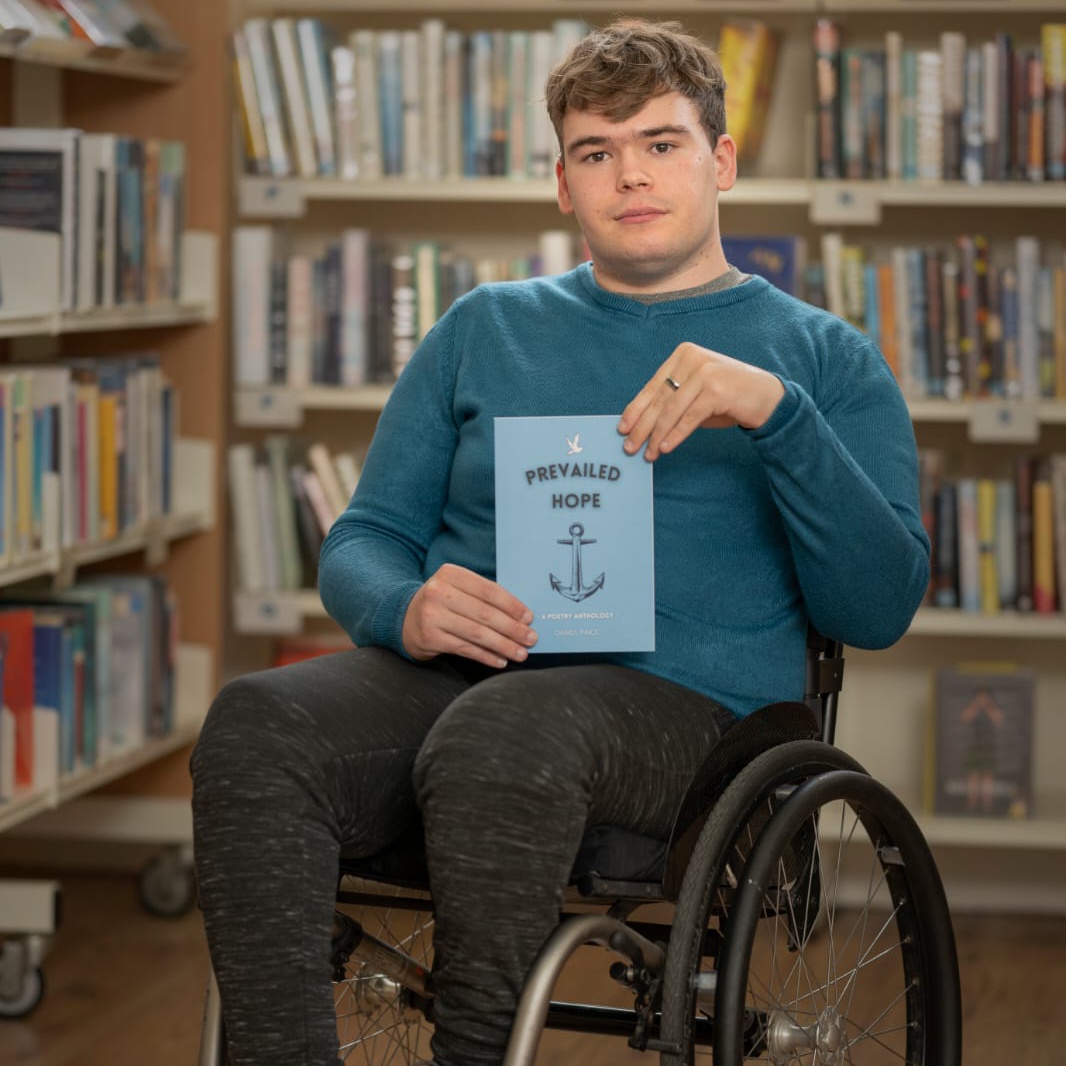

At this point, I've spoken about voice-to-text dictation so much. Over the course of my previous posts, we have spoken about using dictation in terms of writing and building a writing career, but only touched on the accessibility side of things; almost as a byproduct of how useful I have found voice-to-text dictation. It's important to note that — before I continue — I'm writing this based on my experience, and from my own interest, not as an expert.
Physical fatigue and pain
I thought it best to start with this one because I think it's something that everyone can relate to in some way. As someone who types a lot for their day job, for example, it can lead to things such as RSI (which is pains in your fingers and your hands), and it can lead to things like eye strain. Whereas voice-to-text dictation helps alleviate that, because you are simply focusing on how to project your voice, and you can be pretty much any position. So, for example, I am dictating this from my bed whilst I am watching a program. I do a lot of my writing as I'm watching a program.
Not only that, but I'm also reducing my back pain in terms of needing to sit in one position for a prolonged period of time. As a wheelchair user, I am very used to staying in one position, so it can be freeing knowing that I can change position as frequently as I need to. Compounding with that, if somebody is in less pain, then they are able to write more, and think more about what they're intending to write and why. If you use a computer as part of your day job, the last thing that you want to do is sit down to do more typing. Even then, you may want to use voice-to-text dictation as part of your day job. As a wheelchair user, a lot of my day is focused on the energy needed to be put into physical movement. Things like dictation alleviate the cognitive load, so that I can focus the majority of my energy on the physical side of things.
Neurodivergence and getting the words onto the page
Epilepsy can mean that I often feel foggy-headed. Dictation can help get the core ideas onto the page despite this, because of the flexibility and ease. As alluded to above, it can help if you struggle to get words down onto the page, because you simply have to start somewhere — and then from there the ideas expand. It is here I feel like I should explain that anybody can struggle with putting the words onto the page, whether you are neurodivergent or not; it's just a consistency that I have been finding through my experience. Anybody could come across it and glean something from my process, whoever they are.
If you are like me, before you start a dictation session, you make some bullet points of the structure of a piece. I find that once I have started something, it is much easier to continue. It is more so about the inertia of starting; the easier that I can make it for myself, the quicker that is done. The thing with dictation is the expectation that whatever you write is going to be a complete mess to begin with. As a result, you learn to completely disregard the inner editor, at least for a minute. However, for things like short correspondence and emails, I do find that inserting punctuation using voice commands is mostly useful, as you're able to transcribe an email within seconds.
I don't like to use voice commands on extended pieces of writing, because I feel that the transference from words to punctuation disrupts my train of thought. I say this to give you an example of how I have adapted the process. If you read about voice-to-text dictation online, there is a lot about how using voice commands and inserting punctuation as you go along can be a little quicker. I do agree in the sense that if you are able to get into a routine of doing this smoothly. I would also argue that, either way, there is going to be an editing process that needs to be done. So, to get the words onto the page, I do need to just focus on getting the words down — so that I can then reflect on it and develop it.
Compounding on the idea of a physical disability and the fact that the dictation removes some of the cognitive load, there isn't the transition that there is in typing. What I mean by this is the fact that, when you are typing, you have to think about what we want to say, and then you have to coordinate your fingers so that they tap the right button. Then, you have to keep an eye on what you're actually typing to make sure that it makes sense — which then leads to your inner editor kicking into gear. As this is not happening with dictation, this allows for deeper thinking and getting a lot done very quickly. By getting a lot done very quickly, I don't just mean producing a lot of words.
Voice-to-text dictation and text-to-speech
From the perspective of a writer, I do get the impression that voice-to-text dictation lends itself well to voice navigation. There is also text-to-speech — which is essentially the opposite. I have asked a device or software to read out the writing that I have written, so that I can listen to it instead of reading. It's interesting to see what the eyes miss and what is picked up on. Admittedly, I don't use text-to-speech as much as I use speech-to-text, but I do use that as a basis to learn about the other forms; so that I have a broad understanding of all of my options
Technology has advanced so much that there are so many free or paid options when it comes to voice-to-text. Ultimately, there are so many different options, depending on your focus and what you're expecting from your software and technology. For example, I use the standard Google Voice typing keyboard because it is free, and it picks up my words with increasing accuracy. I do find that when I'm connected to the Wi-Fi the dictation is a lot smoother, however, again, I do appreciate the editing is always going to be part of the process. I'm more than willing to go back and decipher what I was trying to say. In some cases, to be honest, it's literally rewriting entire sentences because I have no idea what I was trying to say. However, that's more so if I haven't been connected to the Wi-Fi for an extended period of time. Like I say, there are many different options in terms of software, but it depends on your purpose, and also the level of organisation that you need.
What I mean by this is, I simply want something that can transcribe what I'm saying — exactly as I'm saying it — as I'm talking, but other people may like it to help them organise these chunks of text into sections and notes and help them expand using AI. I must add here that I don't condone the use of AI to generate writing, or rhe generating of ideas or content itself.
A common misconception surrounding disability and accessibility tools
I feel that it's important to talk about this because I am somebody who is disabled, but I also don't need to use dictation because it's my only option — which I think is something of a misconception. When people see me using voice-to-text dictation, they may see me in my wheelchair, and assume that because I'm disabled, I need to use this as an accessibility tool. In fact, I choose to use voice-to-text dictation because it makes writing of any kind much smoother for me. It works with my workflow, and the way that my mind works. It just so happens that the fact that I am disabled is an irrelevant aspect in this case. All this to say that you do not need to be disabled to be ‘allowed’ to use an accessibility tool. Accessibility is for everyone.
I've mentioned before that dictation has revolutionised my writing process, and I think it's something that anybody could get at least some benefit out of. Even using dictation some of the time, and then typing for the rest of it.
One one of the things that holds me back from using dictation as much is the feeling of judgement and embarrassment. The fact that — to other people — I just look as though I am speaking out loud to myself, which is not entirely the truth. I'm using this as a tool with purpose. To be honest, in my experience, if people have a negative perception of something it is more a perception of themselves. In saying that, accessibility is simply the idea of using something that allows to make things easier for yourself — you don't need to justify it. Although, society and the people around you can definitely make you feel that way.


Comments