


Creating Poetry With Voice-to-text Dictation
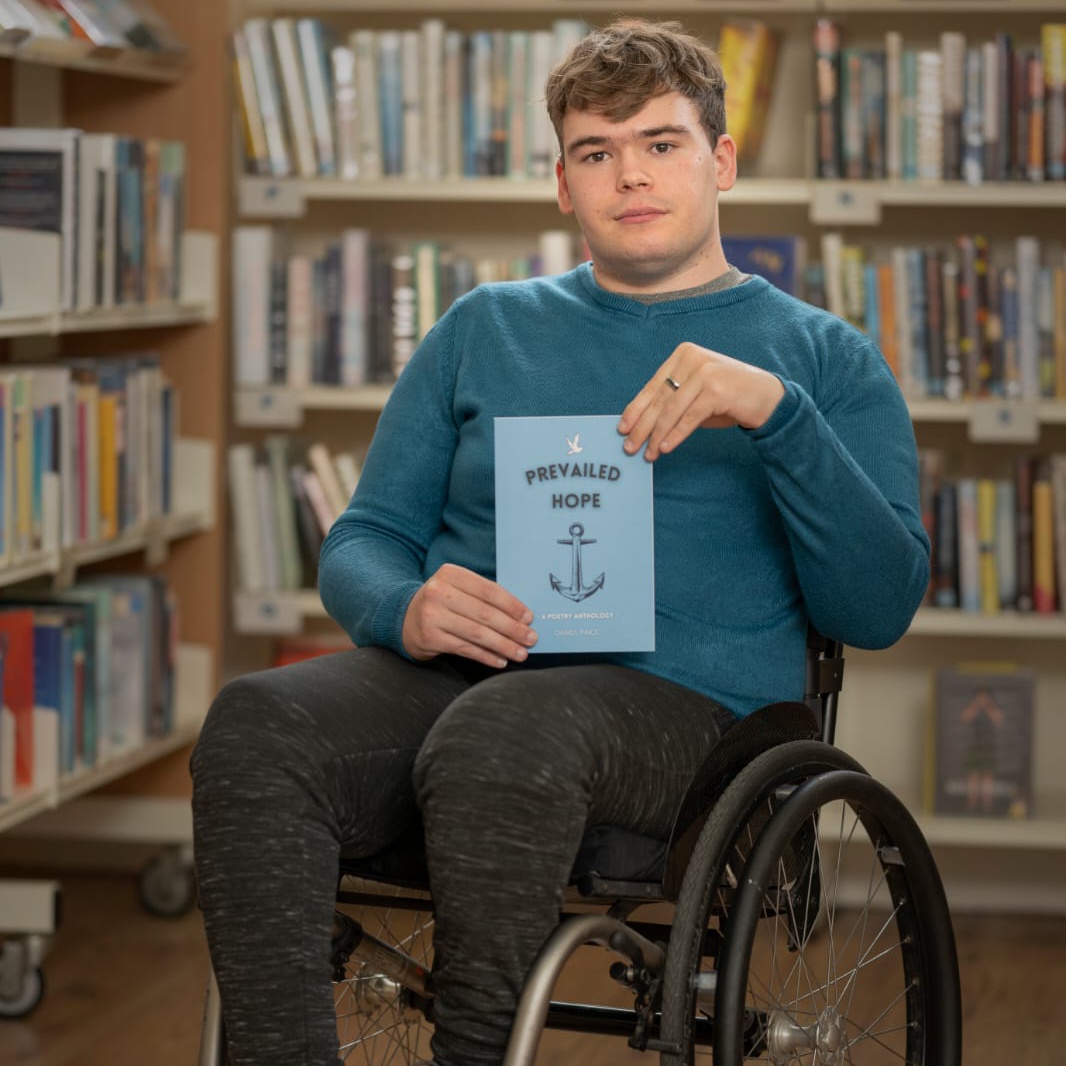

Over the years, I have written a lot about how I have found discovering voice-to-text dictation invaluable for my writing process. In previous posts, I have discussed how dictation can be used as a process, and how it is useful in different types of writing. That said, I have never used it to write poetry — until now.
There are a few ways that it can be more beneficial than typing — or perhaps even handwriting. This surprised me, particularly because poetry is a very vulnerable and intimate form of writing; I kind of connected the raw dump of writing and the juxtaposition of the robotic nature of dictation. So, here are some tips and tricks that you may find useful in applying your own to your own writing routine. As always, you can mix and match; take what works, and leave what doesn't.
Dictation to get the thought, feelings, and main themes
Poetry is all about exploring big concepts and complex feelings in a way that is succinct and hits home in the right way. A way that can be useful to do this is a stream of consciousness of what you need to say. For example, when I am first writing a poem, I have an idea of the central theme or emotion, but I'm not sure how to frame it. This is where the stream of consciousness comes in handy. I can write out everything that I want to say, and then assimilate how. It does mean that there are lots of leftover words that are perhaps redundant, but I compare it to sculpting: it takes chopping and moulding to get a piece right, but you need enough pieces to do that. The surplus words may also evolve into other pieces of writing, or trigger different thoughts that lead into different directions. Everything you write can become grist to the mill.
With that in mind, the speed at which you can get words on the page is also an asset. I have read that when typing, we can produce anything from 70-90 words, but when we are dictating this can increase dramatically; something like 100-140 words per minute. A dramatic increase in the number of words on the page. When we put this increase and the stream of consciousness together, it can mean that you have the raw draft of two or three poems in ten minutes (at least in my experience!). These are by no means publishable, but it gives you plenty to work with. I have always enjoyed the editing process, and watching a piece come together.
Poetry is a spoken medium

Of course, poetry is written to be performed. So, dictation ends up cutting out the middle man and devices such as cadence and rhyme come naturally, as the words are being spoken as they are produced. Adding to that, the tone can often direct the type of words that are used, and this is again different in spoken language as it is with written. The most stark example that comes to mind is, if you would like a piece to have a more deep and reflective tone, you might use a more archaic word, because that will lead readers to consider how and why that word is being used within that particular context.
In the editing process, this would be sculpted as described above, and in doing so, it can be structured more as though it has been written. What I mean by this is how line breaks are often used to signify the pace and rhythm of a poem, and which aspects of the poem are stressed. In that sense, you can get two editing passes done at the same time — because you're trying to organise the words but then once you have organised, you are creating art, rather than a collection of words. Compounding this, because you are speaking, you can try out multiple different compositions of the same sentence or stanza in a very short space of time. In doing so, you can work out the right phrasing for the intended purpose.
The difference between handwriting, typing, and using your voice
I feel like this is particularly important to distinguish because, previously, I have written drafts of poetry by hand. I find that It is much more natural and emotive in the way that my brain works. I found this was the case because, when I am typing, there is an element of editing that happens before the words even reach the page. For example, I'm thinking about what I want to express, and then I'm thinking about how to convey that, and then it informs my typing. Whereas handwriting takes the digital aspect out of the writing process, and therefore can feel a little bit more liberating in the fact that it feels like it's just you and your words.
It's not to say that I don't still either draft and plan my poems by typing or handwriting, because a lot of the time I do find that it depends on the size of the project that you're completing, or the type of poem that you are trying to write. It's a bit like what writers say about each book needing a different process. I find the same applies for poetry.
Getting more ideas from messy drafts
We've spoken about how dictation can allow you to develop more and different ideas, but I also think dictation can offer a level of liberation that you don't get when you're typing or handwriting. It might just be me, but I find that if I'm typing a poem — for example — I feel more attached to what I have written. Therefore, I find it difficult to edit and figure out what doesn't fit. Admittedly, over the years, I have got better at killing my darlings and working with what works and letting go of what doesn't, but it is definitely easier when I have dictated a piece, and I know that it is naturally going to be more verbose than it needs to be.
Because of the much quicker drafting speed, I find it much easier to be able to write more than one draft with the same piece. This comes more down to my writing process, but I think it's worth mentioning.
What I mean is, I tend to write a first draft and then just work from that in terms of editing it. So that eventually becomes my final piece, whereas with dictation — particularly with poetry — it's much easier to write a really rough draft to figure out what I want to say, and then completely rewrite it again several times if necessary. It doesn't feel as though I have put in any more or less mental energy.
By extension, it comes back to the stream of consciousness that I was mentioning earlier. If you wish, the voice-to-text dictation can offer the opportunity to write about the same thing, but from different perspectives. For example, I might want to write about physical pain. So, in order to explore that, I might write about heartache, or in another poem I might write about the length of time. With dictation, these different perspectives can be created very quickly, and these comparisons are drawn quickly. All this to say that voice-to-text dictation, at least in my case, can take away the mental fatigue so I can focus on working at what I want to say — and the creative process of getting that down effectively — rather than focusing on physically getting the words down so that I have a draft to work with.
To conclude, dictation is definitely something that requires time and patience to get used to, but I have shown that it can be used in all different types of writing — including poetry. It requires being open-minded and adaptable. Having said that, as I mentioned, you're more than welcome to take aspects of what I have written if it works for you. However, if nothing works for you, then that is also fine. Part of being a writer is figuring out what works best for you, and if I can play my part in that, then that is brilliant.


Comments