


How to Write Poetry: Where to Start
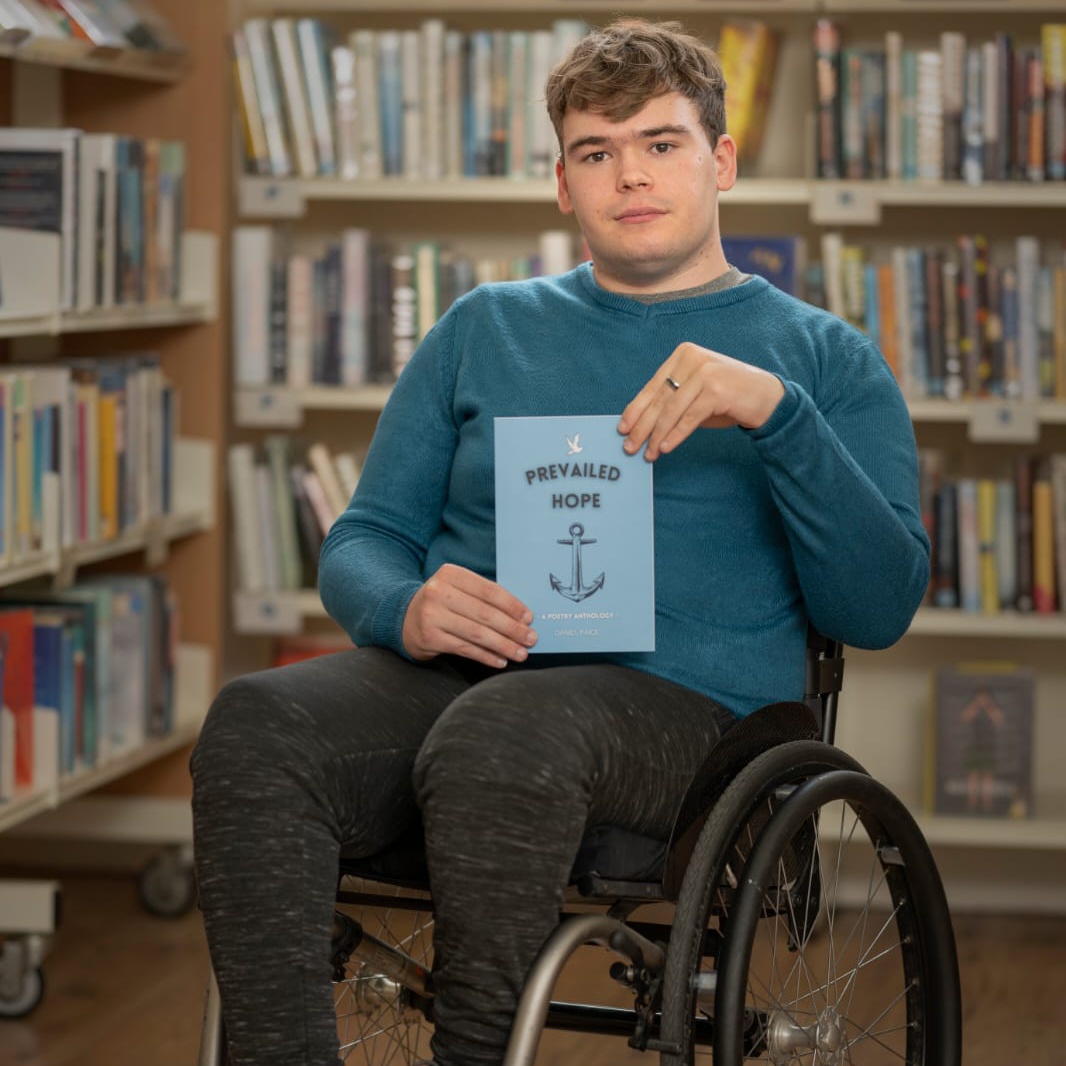

I was asked recently how and why I was drawn to poetry in the first place — rather than something like a novel. When somebody asks me that, I describe falling into it — but what does this actually mean, and how could you start? As such, this will be a development of a previous blog post where I discussed similar ideas, but I will be going into these a little bit more in depth and approaching them from a different angle.
I've mentioned a few times before that I started writing my first poetry anthology when I was thirteen (not consciously thinking of it as a poetry anthology, but rather just a few stray thoughts, and then writing and publishing at nineteen). At the time, the thought of writing a book that required massive world-building felt too overwhelming to even begin the process. So, poetry was a way of breaking this down. Partly, because I was worried about essentially rewriting some of the books that I had read, rather than creating my own writing. As a result, I needed a way of breaking this down and working out what I wanted to say.
Due to the precise nature of poetry, it gave me that gateway to start. For me, poetry is a way of getting out all of the emotions and insights that I would want to portray in any piece of writing, but do it precisely and with deep thought. In effect, I'm spending more time thinking about the effect on the reader or the listener (depending on the medium by which it is consumed), rather than the actual writing. I haven't really considered this before, but perhaps my affinity with poetry comes more so from the fact that I am disabled: the thought of sitting at a keyboard for hours may have psychologically steered me towards poetry, because I know that I can only spend so long drafting before I can sit there and edit it. But that's only in hindsight. Another consideration is that I was also drawn to poetry because I experience emotions very deeply, and I felt as though that was the only way that I could articulate this — again — very precisely. In comparison, I had the impression that, if I were to write a novel, I would need to build up this whole backstory for this one minuscule moment of emotion to make sense within the story. I appreciate this is all part and parcel of writing a book. The thought of starting with this very specific sentiment, and then having to create a whole story around it, just completely overwhelmed me at the time.
My experience of poetry has allowed me to experiment with different turns of phrase, and how the same thing can be expressed multiple times, and how the impact of the overall piece can shift depending on how something is articulated again. This is something that can be shown through longer pieces of writing (I daresay that you have noticed that I have described something very similar before but in a different way, depending on what I want you to focus on). For me, poetry is a way of focusing on the emotions, rather than the words that have been said. I feel like, with a novel, the opposite can be the focus.
Where to start: what insight can you bring?
We all feel emotions, so it is important to think about how that emotion is unique to you: how do you experience this emotion? In saying that, you do need to consider how as humans — for example —we generally expect to experience anger. can you incorporate how you specifically tend to experience it, and any insights that you may have noticed at any point? This will help with both the focus and perspective within your poetry.
It is important to note here that — although you are trying to evoke a certain amount of emotional connection to an understanding of what you're saying — you can also provide a completely unique insight. Just because somebody may not understand your unique experience of an emotion, it doesn't mean that they won't be able to connect the dots and view an experience of life from your perspective. It is not redundant just because somebody has not thought about something in that way before.
Forget about what you were told in school
In school, we are quite often taught that poetry should be a certain way, and that we should emulate famous writers such as Alfred Tennyson and William Shakespeare, but that is not necessarily true. Yes, the different forms do exist, and they can be useful. They do certainly have their place. However, if you are trying to get into poetry and come to an understanding of how it can be enjoyed, you don't need to be met with a wall of expectation and rules that you're expected to follow.
A lot of people assume that, in order for poetry to be classed as poetry, it needs to rhyme. That is not the case. In my poetry, there are bits that rhyme; some bits have a rhythm to them — but I tend to focus on the sentiment of what I am trying to say, and how this will be read or listened to. So, again, I'm more focusing on the perspective and the actual pacing of the writing itself.
A poem can be any length you want. It doesn't have to be a certain number of lines or stanzas for it to ‘qualify’ as poetry. A poem can literally be one word or it could be 300 pages (300 pages for one poem, I mean. So, if you've never written poetry before, it might be a case that you just write a few lines that make you feel something, that articulate something that you have felt and leave it at that. It may be that, once you have written those lines, you have an idea of how you would like to expand on that idea — and therefore the poem would become much longer. But again, there is no pressure to make the poem as long as possible. That is not the idea. The idea is to have as much impact as possible.
To take this from a slightly different angle, I have read some extremely long poems that don't seem to have much emotional suspension, but then towards the end of the poem everything ties together and you become aware of how all of the ideas are connected. That then becomes a very powerful poem. It's not necessarily a powerful poem just because it rhymes every other line.
How is the poetry being read?
There is something to be said for whether you are reading or listening to poetry. This is because listening to poetry and reading poetry is very different. As have said above, I like to consider the fact that people would be consuming my poetry in either way, and therefore I do like to consider how the pacing would have an impact in both mediums. The same thing could be said for how you enjoy poetry. For example, I like reading poetry, but I do find it a lot harder to connect with what's being said. Whereas if somebody is reading the poetry to me, they have an idea of why something has been written, the inflections, and the emotion behind the words. This then adds a layer of connection to the pieces themselves. I say this because it might be that you've only ever read poetry, and therefore you haven't been able to connect with it in the same way. Maybe something like an audiobook would be better for you, or listening to somebody in person read out the poem that they have written. Perhaps that would interest you more. It would certainly be less cognitive effort, if that is something that you struggle with.
This is all to say that there are many different ways of enjoying poetry, but at the same time, I do understand you don't necessarily need to enjoy poetry. It is not necessary. It is a unique form of writing, and I do believe that there is a lot to be garnered from it. Especially because every word needs to be reflected upon…the precise articulation of even the simplest of thoughts or feelings, rather than the words themselves.


Comments